
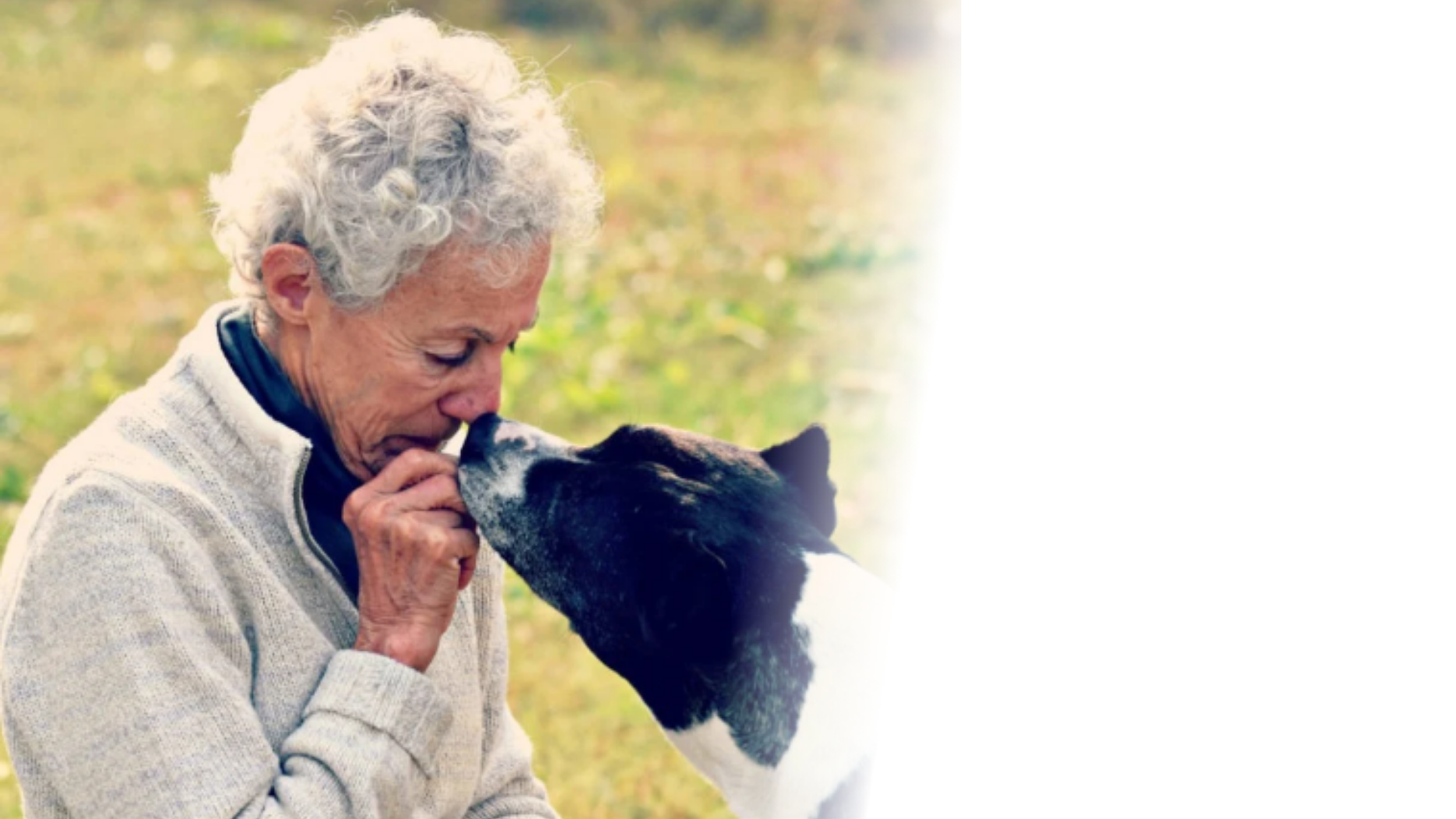
Building a social strategy that leads to real life attention, traffic, and action.
SOCIAL STRATEGY · CONTENT CREATION · COPYWRITING · ONGOING CAMPAIGN SUPPORT · PUBLIC MEDIA RELATIONS
Social media wasn’t an automatic sell for everyone inside the organization. And in a smaller market like Aiken, SC, there was reasonable doubt about how much difference social media could really make.
Traditional shelter communication often leaned on flyers, infographic-style graphics, straightforward announcements, and emotional appeals. The opportunity was to build something more human, more useful, and more likely to move people from seeing a post to actually taking action.
This shift did not happen overnight.
We created a strategic plan. We tested the plan. We stayed consistent to the plan.
Direct language worked, so we used more. Stories spoken like a friend at the shelter performed well, so we wrote more. Strong photos of the animals themselves earned attention, so we stopped creating graphics. And when something didn’t connect, we would pivot.
Over time, the results showed. Animals found foster homes. Adoption promotions brought people through the doors. Hard-to-place pets found families. Individual stories routinely reached well beyond just followers. And eventually, the doubts faded.
The strategy didn’t just change the feed. It changed what the organization believed good marketing could do.
THE CHALLENGE
People were seeing the content. The real question was whether it could move them to act.
For a shelter, attention only matters if it leads to action.
A post can earn likes and still leave an animal waiting for a home. A foster request can reach thousands of people without finding anyone willing to step in. An adoption event can be promoted without giving anyone a real reason to show up. So the goal became simple…
Stop the scroll. Build the connection. Make the next step easy.
THE DECISION
Write like a person, not an institution.
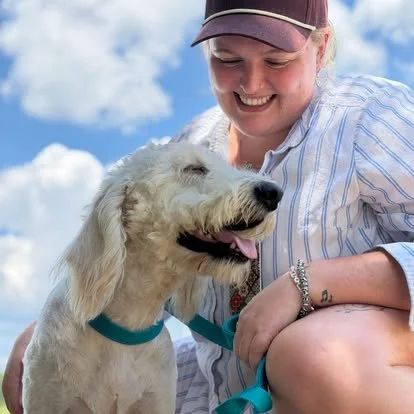
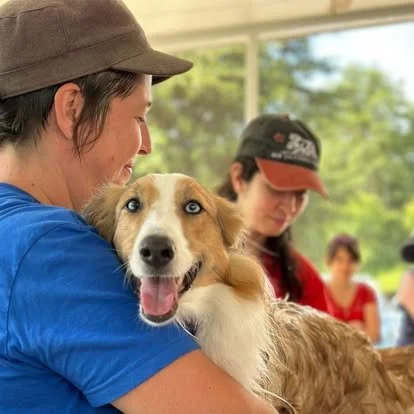
The strongest content didn’t sound like a press release, an adoption flyer, or an organization asking for help. It sounded like someone who worked at the shelter just telling you what’s happened.
That meant using direct language, letting the brand’s personality show, and trusting the animals and photos to do more of the heavy emotional work.
It also meant changing course when the traditional approaches weren’t working. Flyers became less important and infographic-style creative was used less often. Overly emotional appeals were changed to specific stories, useful context, and simple next steps.
The strategy became less about filling a calendar and more about answering one question…
WHAT IS ACTUALLY GOING TO INSPIRE SOMEONE TO TAKE ACTION?
→
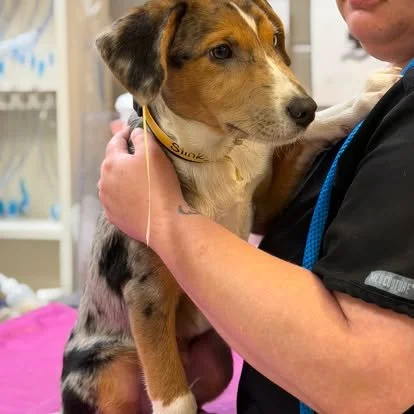
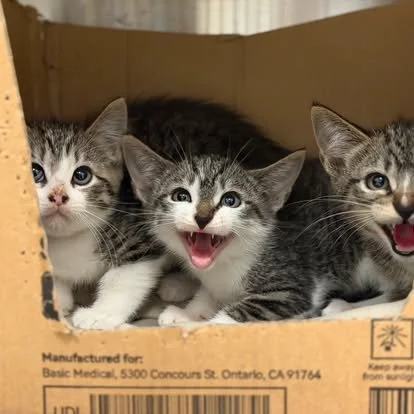
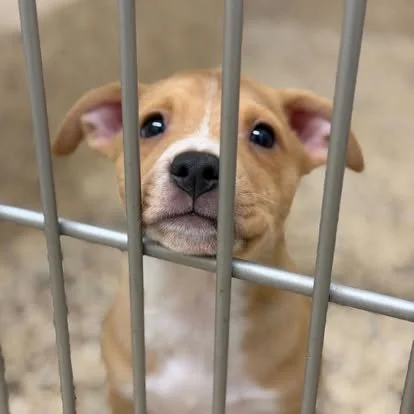
SAME PUPPIES. SAME PHOTO. A DIFFERENT STORY.
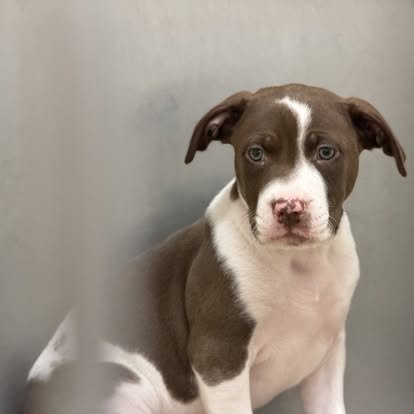
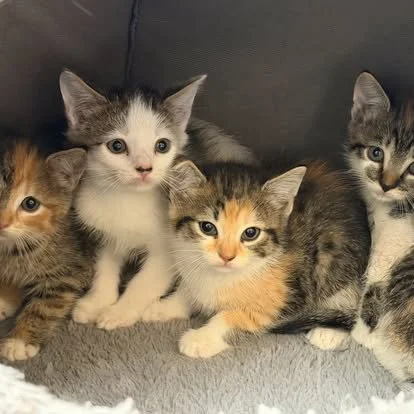
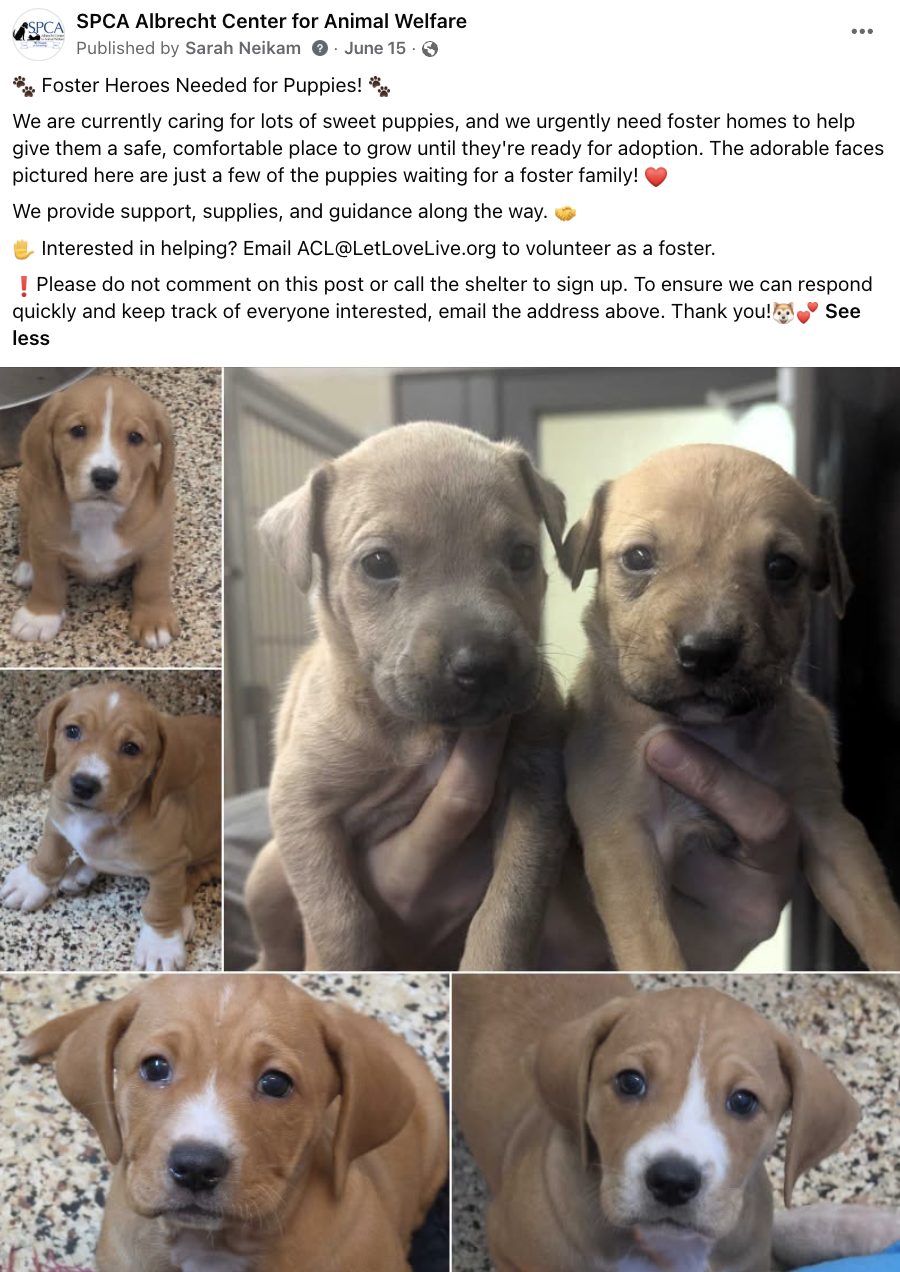
A foster request had gone out the day before. The puppies were cute, the need was real, the instructions were clear. But almost nothing happened.
The post reached just over 5,000 people and generated no meaningful foster interest.
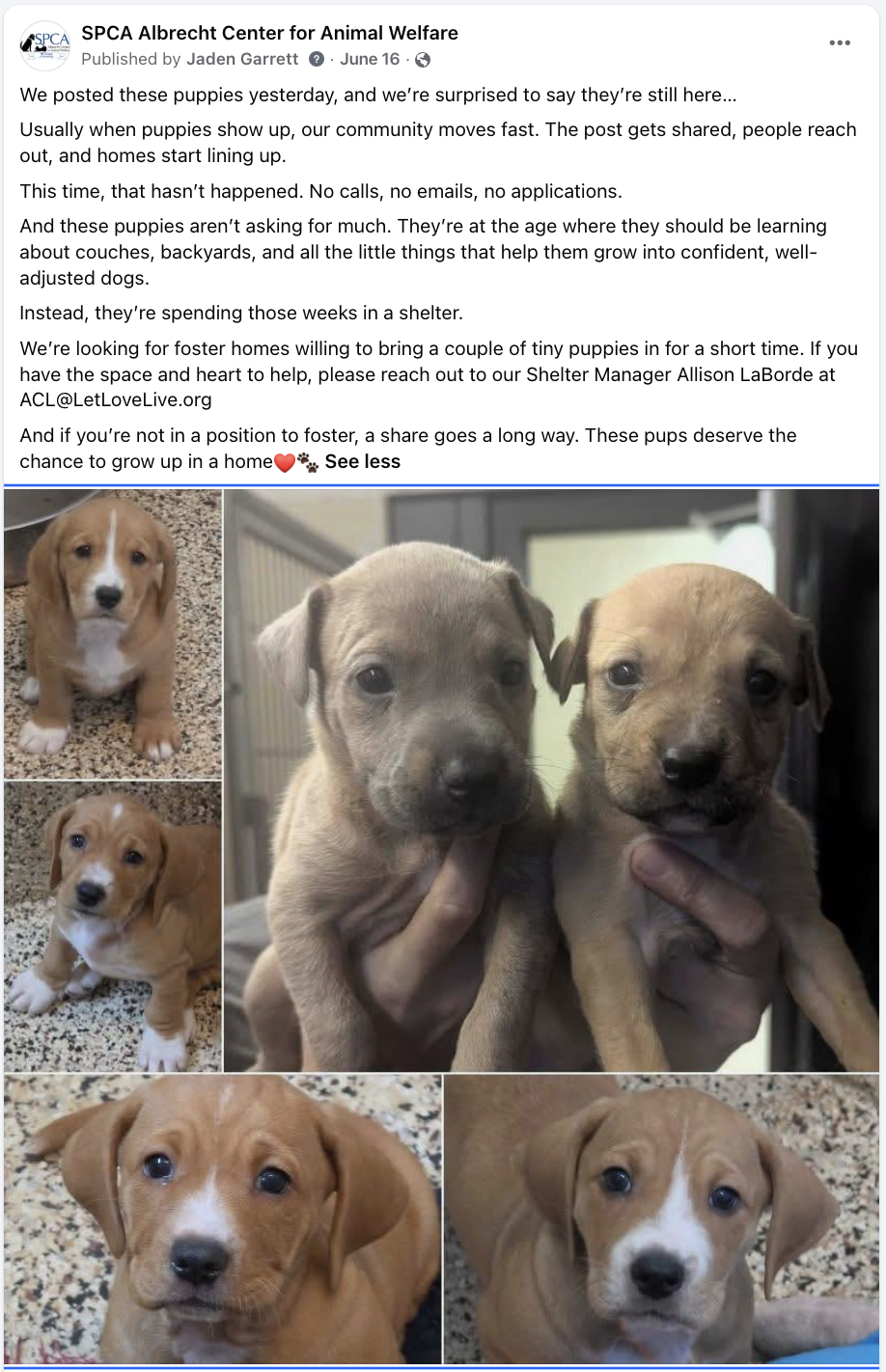
The next day, we used the exact same photo and told the story differently. Instead of simply announcing that foster homes were needed, the post acknowledged something the audience already understood - puppies usually move fast, but these hadn’t.
And every extra day in the shelter was another day they weren’t learning about couches, backyards, and the things that help puppies grow into confident dogs.
The ask stayed the same, but the story changed.
The rewritten post reached more than 51,000 people, generated calls, emails, messages, and visits — and every puppy was in foster by the end of the week.
5.1K views
51.5K views
MAKE THE ANIMAL MEMORABLE
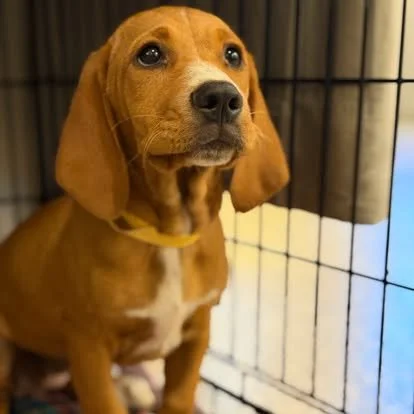
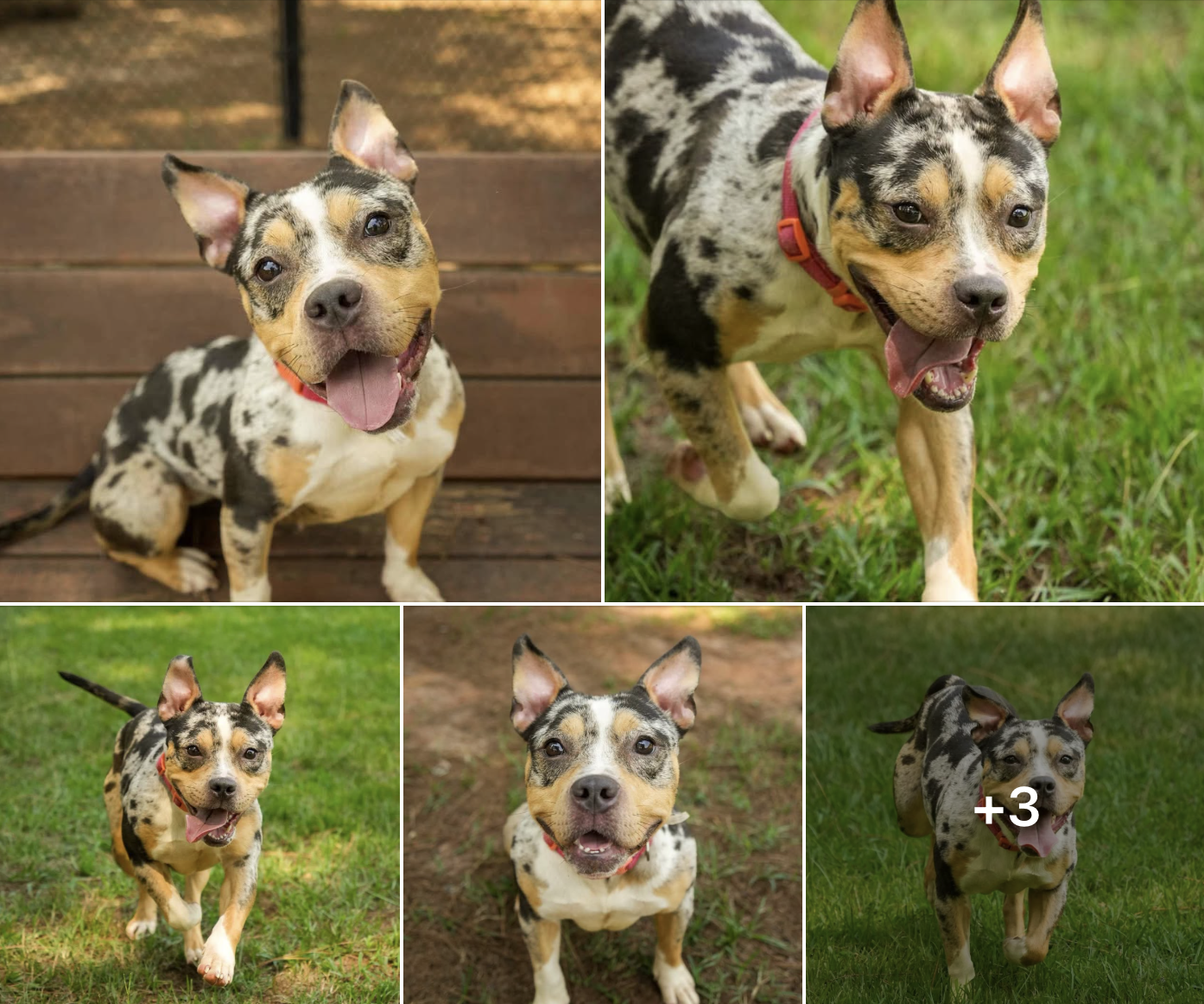
Wellsy already did the hardest part. She was funny, affectionate, eager to learn, and almost impossible not to like.
The job of the post wasn’t to manufacture urgency. It was to help the audience see what the people who had spent time with her already knew.
The copy focused on the experience of meeting her - the belly rubs, the puppy enthusiasm, the way she looked to people for what came next.
Then it made the action easy. Come meet her.
Wellsy was adopted within six hours of the post.
81K+ views · 1,870 link clicks · adopted within 6 hours
TURN ONLINE ATTENTION INTO FOOT TRAFFIC.
Sometimes the best message is the simplest one.
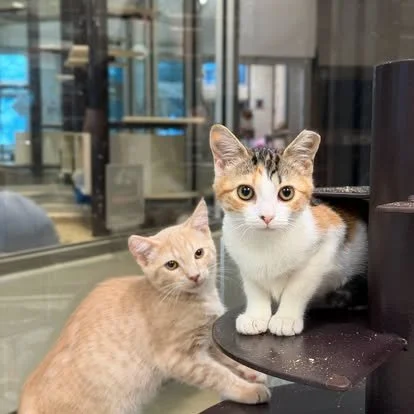
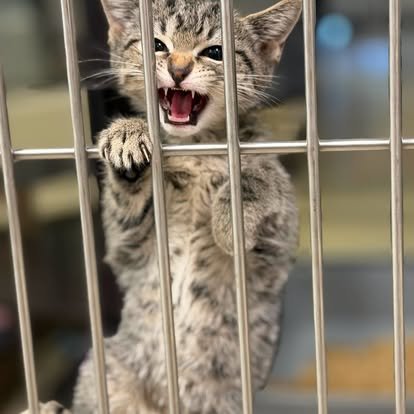
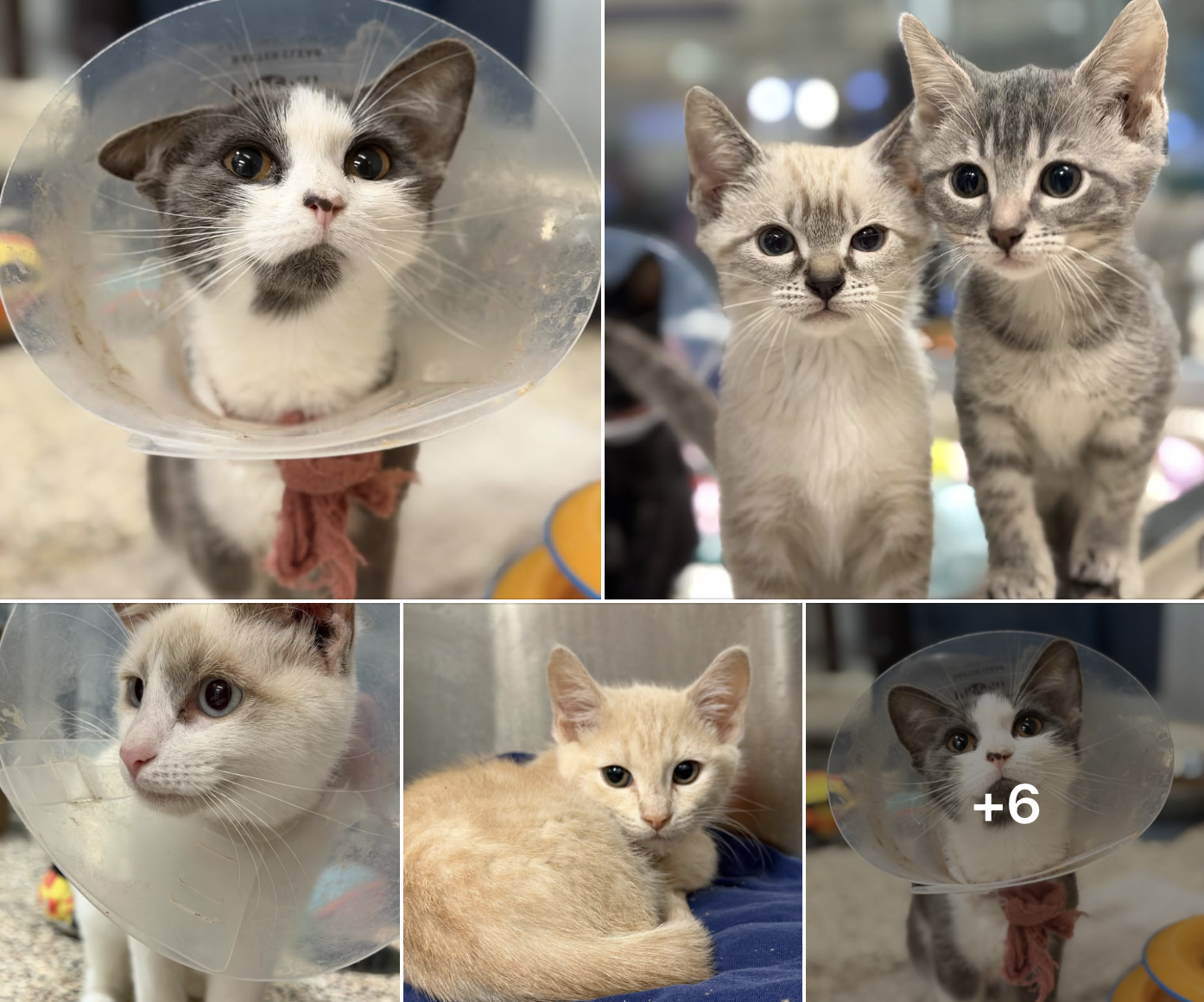
The shelter had taken in 147 cats and kittens in May, the adoption floor was filling quickly, and another wave of kittens was already coming.
So the offer was straightforward - free adoptions on all cats and kittens.
Instead of packaging the message like a traditional event flyer, we used direct language, useful context, and just enough humor to make the situation friendly. The result wasn’t just online attention… It showed up at the front door.
“Jaden posted it Friday AM and we did 16 feline adoptions that day, and had a line at the door when we opened Saturday.”
— Shelter Manager, weekly staff update
TELLING THE STORY THE CAT COULDN’T.
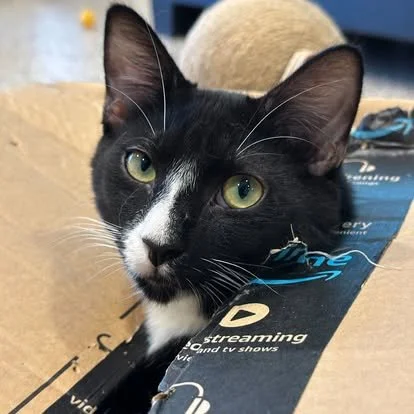
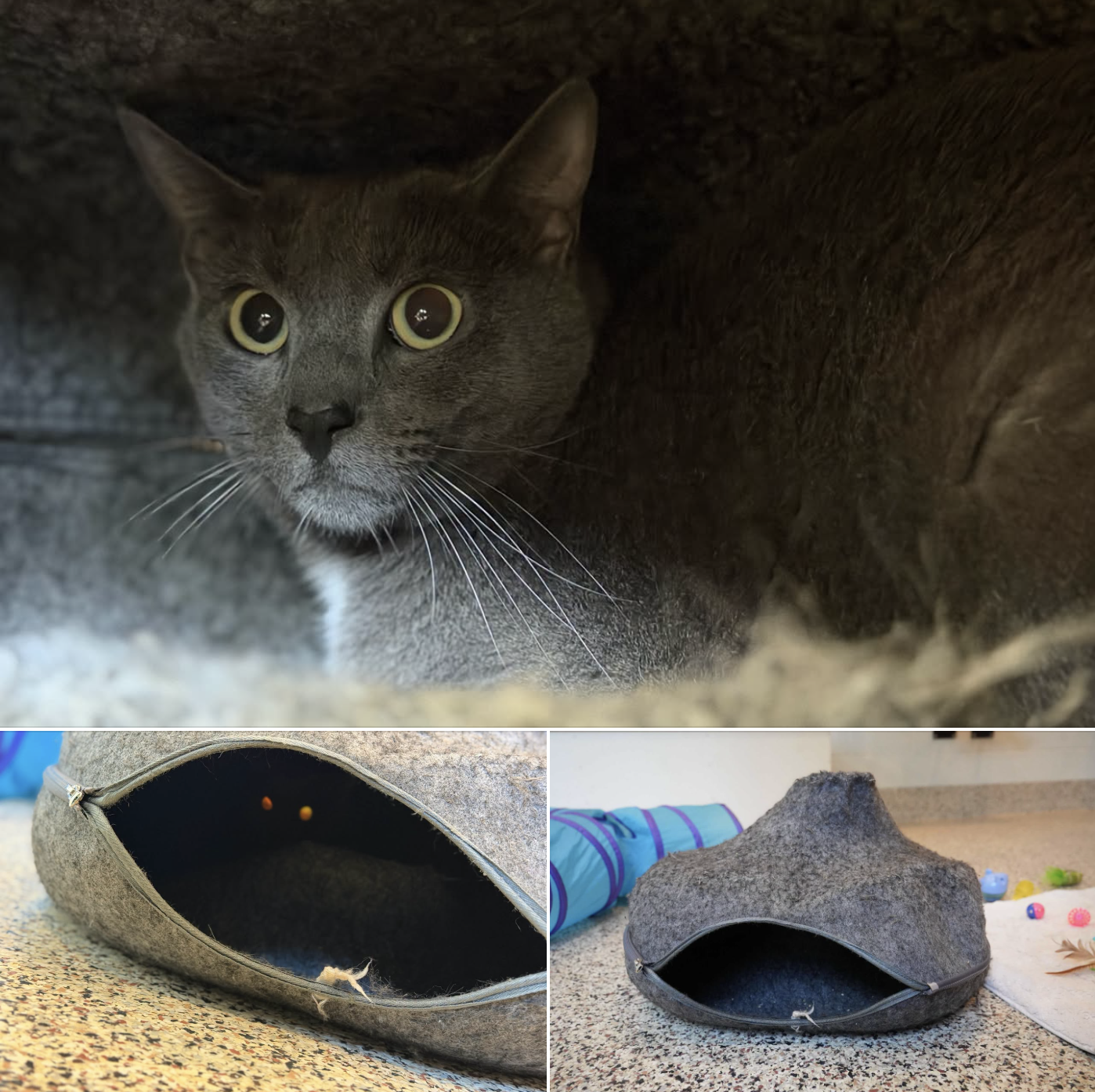
Remington was adopted from the shelter as a kitten, then returned after losing his owner. He spent most of his time hiding and visitors would walk right past his kennel without ever really seeing him. And that created a simple problem - How does a cat get adopted when nobody gets to meet him?
So we stopped waiting for people to discover him in person.
A long-form Facebook post introduced Remington as he is, explained why he was hiding, what he had been through, the kind of home he needed, and why someone might have to take a chance on a cat they couldn’t meet in the traditional way.
Then we carried the story beyond social.
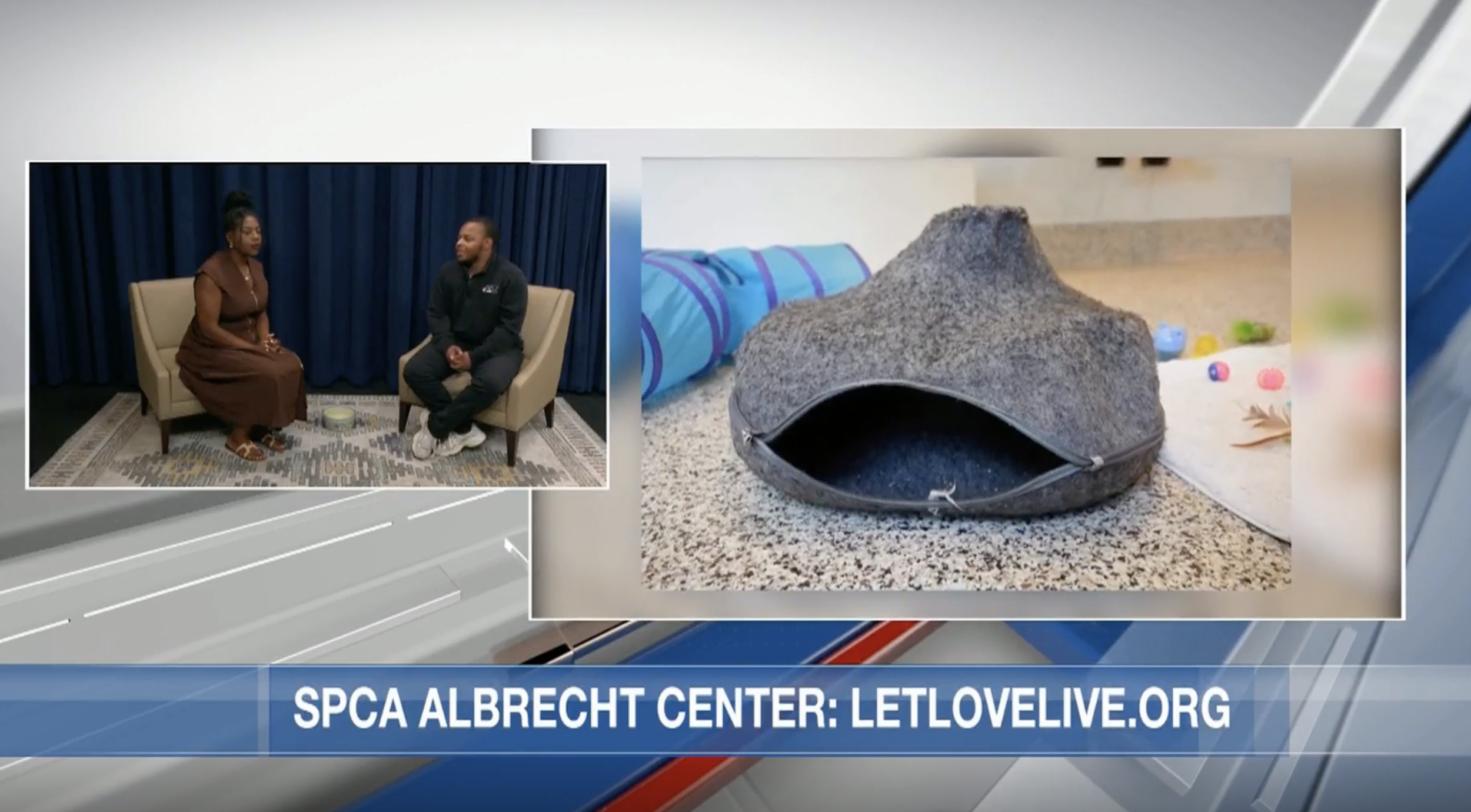
The next morning, for the SPCA’s weekly Take Me Home television segment, we did something a bit different… We showed up without an animal.
Instead, the station displayed the same photos from the Facebook post while we explained why Remington wasn’t sitting beside us.
The social post created the story and the TV segment extended it, createding the visibility his kennel never could. Remington was adopted that weekend.
The strongest outcome wasn’t one viral post. It was consistency.
Now, foster requests generate real responses. Adoption stories help animals find homes. Promotions bring people through the doors and long-form stories reach people well beyond the shelter’s existing audience.

What We’ve Learned
More content isn’t always the answer.
Better decisions about what people needed to see, feel, and understand make a difference.
Social media worked in Aiken not because the audience was enormous or because every post was polished.
It worked because the strategy paid attention to what people responded to and stayed consistent long enough to learn from it.
And when those things came together, the results showed up somewhere much more important than the feed.
Good decisions compound.
Work completed by Jaden Garrett while serving in marketing and communications at the SPCA Albrecht Center.Have a marketing problem that feels familiar?
Based in Aiken, South Carolina, Good Move works with businesses across the CSRA and beyond.